About Fire Resistant Fly Ash Bricks
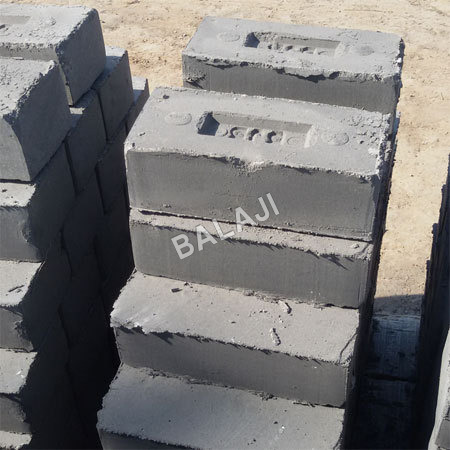
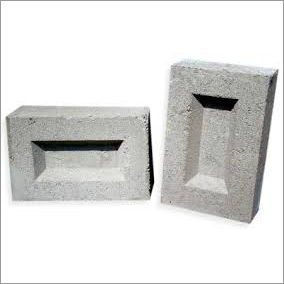
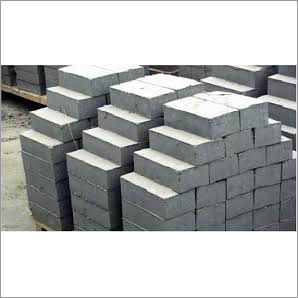
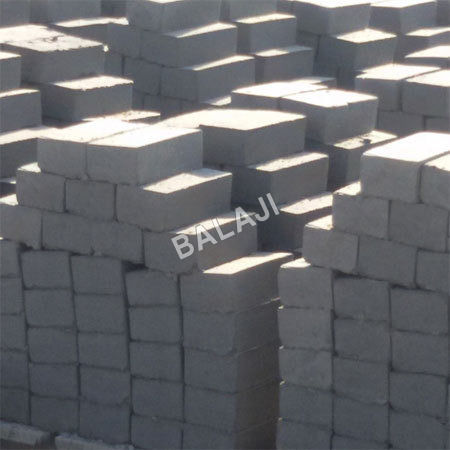
Our company is offering high-grade Fire Resistant Fly Ash Bricks which are used in the heavy duty building and constructional works. Basically, they are made of the fly ash which makes the bricks durable and rugged. Its incorporation in the construction provides strength and durability. Further, the pioneering techniques and methodological production approaches are responsible for their unmatched strength. Our patrons can get these Fire Resistant Fly Ash Bricks from us in a plethora of sizes and features.
Technical details:
|
Material
|
Cement
|
|
Size
|
9 In. X 4 In. X 3 In.
|
|
Brand
|
A Garde
|
|
For Use in
|
Side Walls, Partition Walls
|
|
Resistance Durability
|
Fire Resistant
|
|
Compressive Strength
|
70-120 kg/cm2
|
Exceptional Fire and Thermal ResistanceThese fly ash bricks offer high fire resistance, capable of withstanding temperatures up to 1200C. With a thermal conductivity of 0.90 W/mK, they effectively reduce heat transfer, sustaining structural integrity during intense thermal exposure. Their resistance to thermal shock and chemical attacks ensures safety and longevity in demanding industrial and residential environments.
Eco-Friendly and Sustainable ChoiceManufactured from recycled fly ash, these bricks significantly reduce environmental impact. Their production process conserves natural resources and curbs waste, aligning with sustainable building practices. The bricks exhibit low efflorescence, high moisture resistance, and adhere to strict quality standards, making them an environmentally responsible option for eco-conscious builders.
Superior Strength and DurabilityBoasting a compressive strength of 8-10 MPa and a long working life exceeding 50 years, these fire resistant bricks promise robust structural support. Their low porosity ensures less water penetration and superior frost resistance. These qualities make them suitable for various challenging construction applications, guaranteeing lasting performance even in harsh climates.
FAQs of Fire Resistant Fly Ash Bricks:
Q: How are Fire Resistant Fly Ash Bricks manufactured?
A: These bricks are produced using a hydraulic press to compact a mixture of fly ash, cement, and additives, resulting in a dense, solid, and smooth-finished product that meets IS 12894:2002 standards. The process ensures consistent quality and superior performance characteristics.
Q: What are the main benefits of using fire resistant fly ash bricks in construction?
A: The primary benefits include high fire resistance (up to 1200C), excellent thermal and sound insulation, outstanding chemical and frost resistance, low water absorption, and eco-friendliness. These bricks are also durable, have low porosity, and require minimal maintenance, making them ideal for both industrial and residential applications.
Q: When should these bricks be preferred over conventional bricks?
A: Choose fire resistant fly ash bricks when enhanced fire safety, sound insulation, and durability are criticalsuch as in industrial settings, high-temperature zones, or eco-friendly construction projects. Their superior properties make them suitable for areas exposed to thermal shock or harsh environmental conditions.
Q: Where can these bricks be effectively used?
A: These bricks are versatile and suitable for constructing walls, partitions, and facades in factories, warehouses, offices, and residential buildings, particularly where fire resistance, thermal insulation, and strength are priorities. Their dimensions and smooth finish facilitate consistent masonry work in diverse construction environments.
Q: What is the typical installation process for fire resistant fly ash bricks?
A: Installation follows standard bricklaying procedures. Bricks are laid using mortar, with precise alignment and finishing. Their smooth surface ensures easy handling and rapid construction. Palletized packing helps in safe transportation and storage before use.
Q: How do these bricks enhance building safety and longevity?
A: Their high compressive strength, thermal shock resistance, frost resistance, and chemical attack resistance increase the structural durability and safety of buildings. With a working life exceeding 50 years, they help ensure long-term reliability and reduced maintenance needs.









 Send Inquiry


 Send Inquiry